
Common Problems
Issues this service can help diagnose.
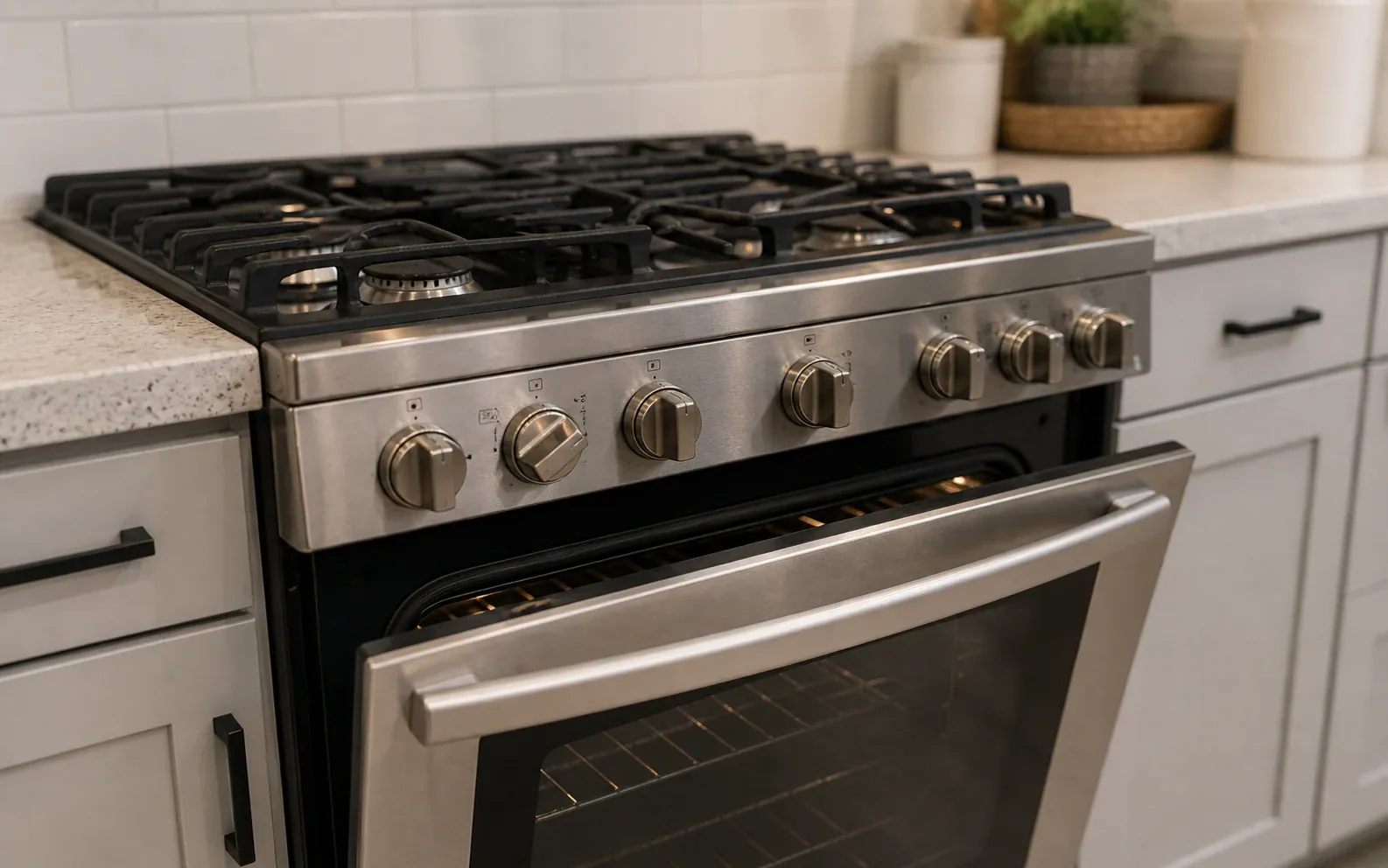
This service covers major household cooking appliances including gas and electric ovens, stoves, ranges, cooktops, microwaves, and built-in appliances where the appliance can be safely accessed for diagnosis.
- Oven not heating
- Oven temperature is inaccurate
- Gas ignition problems
- Electric burner will not heat
- Cooktop element problems
- Range control issues
- Heating element failure
- Microwave problems
- Built-in cooking appliance problems
Symptoms that help with diagnosis
Heating, ignition, burner, control, temperature, and built-in appliance issues should be described separately when scheduling. Stop using the appliance if there is sparking, a burning smell, repeated ignition failure, unsafe heat behavior, or any gas odor.
- 8 years serving Vancouver and nearby Clark County communities.
- Licensed to operate.
- Major household appliances are in scope, including gas and electric appliances.
- Manufacturer warranty support for covered repair or replacement items when applicable.
Before calling about an oven, stove, or range
- Write down whether the problem is heating, ignition, burners, temperature, or controls.
- Call with the appliance type and fuel type if you know them.
- Stop use if there is sparking, a burning smell, repeated ignition failure, or unsafe heat behavior.
- If you smell gas, leave the area and contact the appropriate safety or utility service before scheduling repair.
Safety notes before continued use
Stop using a cooking appliance if there is sparking, a burning smell, unsafe heat behavior, repeated ignition failure, or any gas odor. If you smell gas, leave the area and contact the appropriate safety or utility service before scheduling repair.
U.S. Fire Administration cooking fire safety guidance: The U.S. Fire Administration identifies cooking as the leading cause of home fires and home fire injuries.
U.S. Fire Administration cooking fire statistics: The U.S. Fire Administration estimated 167,800 residential building cooking fires in 2023, with 125 deaths, 2,500 injuries, and $572.7 million in dollar loss.
CPSC carbon monoxide appliance safety guidance: The CPSC warns that blocking combustion airflow in natural gas or propane ovens can produce carbon monoxide.
What to expect during diagnosis
Service starts with the exact heating or control symptom, appliance type, fuel type, power behavior, ignition behavior, accessible components, and any safety concerns.
Repair vs. replacement guidance
The practical recommendation depends on the appliance age, condition, part availability, repair cost, and how severe the issue is. NW Appliance Repair can explain whether repair makes sense and whether manufacturer warranty support may apply.
Questions about oven, stove & range repair
Do you work on gas appliances?
Yes. Gas and electric major household appliances are in scope. For ovens, stoves, ranges, and cooktops, call with the appliance type, fuel type, brand, model if available, and symptom.
Do you repair cooktops, microwaves, and built-in cooking appliances?
Yes. Cooktops, microwaves, and built-in cooking appliances are in scope when they can be safely accessed for diagnosis and repair.
Can an oven temperature problem be diagnosed?
Yes. A diagnosis can help identify whether the issue is calibration, sensing, controls, elements, ignition, or another heating-related cause.
When should I stop using an oven, stove, or range?
Stop use if there is sparking, a burning smell, unsafe heat behavior, repeated ignition failure, or any gas odor. Safety concerns should be handled before continued operation.